
Bringing the Viola home - virtually
New project for historic Hull trawler stranded in the South Atlantic

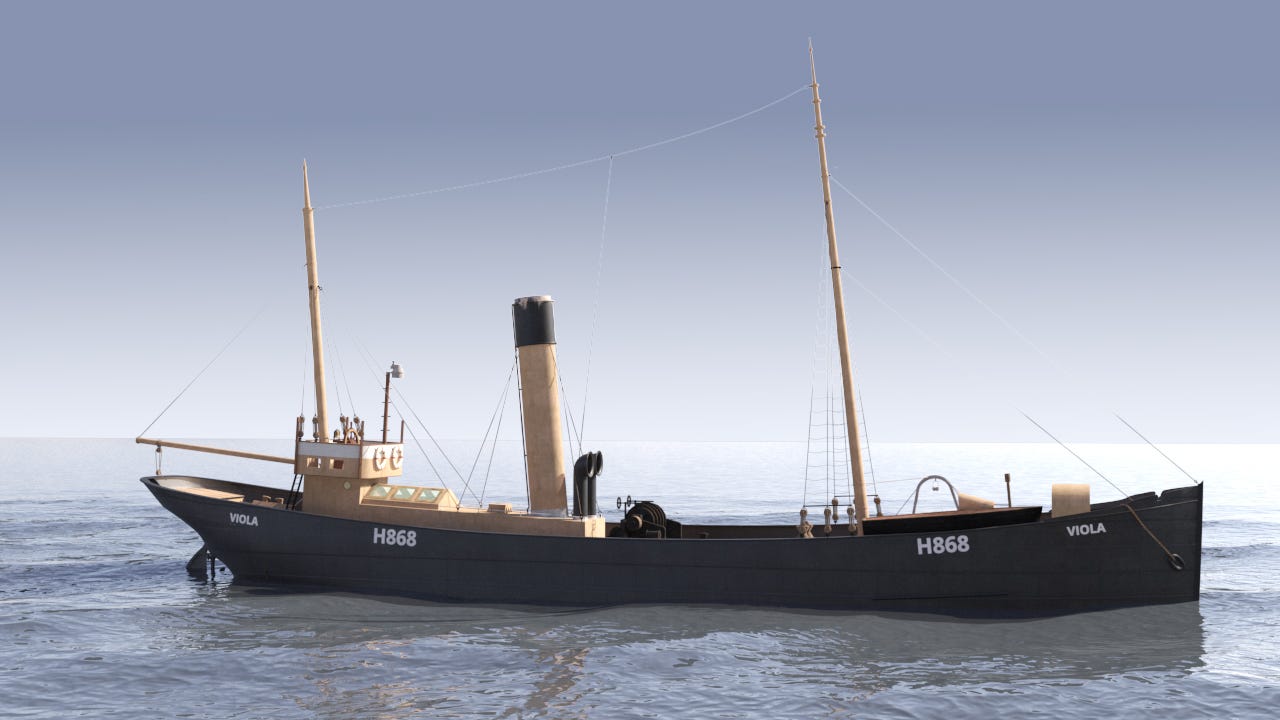
An ambitious multi-million-pound plan to bring the world’s oldest viable steam trawler – Viola – back to Hull has been scuppered by spiralling costs.
But she will still be brought back as a Virtual Viola thanks to a £25,000 project between the Glasgow School of Art – and the trust set up to try to bring her back from her final berth in the South Atlantic.
The Trust also confirmed costs escalated following global disruption from the Covid epidemic.
They set up in 2016 to bring the vessel back and to promote awareness of the ship and Hull’s fishing heritage.
Virtual Viola will be gifted to the £32m Maritime Hull project, with the Trust’s investment ensuring she take her place among the exhibits and artefacts to tell the story of more than 800 years of the city’s seafaring past as part of the ‘Hull – Yorkshire’s Maritime City’ scheme.
It will be premiered with a VIP launch at city’s Trinity House, on November 26, along with a companion film: Viola – Part of the DNA of Hull, by Hull-based filmmaker Dave Lee and which tells the story of the project.
Both will also be shown at community locations in and around Hull as a thank you to supporters of the campaign, and to update them on how the project has developed.
It was originally estimated that it would cost £3m to get Viola back by putting her onto a heavy lift ship and then refurbish her.
The Trust secured pledges for about half that amount, to become active as soon as she arrived home.
It remained confident of finding donors to fund the voyage and it conducted a series of surveys and an assessment of any possible impact on the pristine South Georgia environment of removing the vessel.
Plans were in place for a final assessment in April 2020 to prepare for a salvage operation in autumn that year. But the pandemic prevented all travel to South Georgia and by the time restrictions were lifted, predicted costs had soared to more than £5m.
In 2024 the Trust began to look at other options.
Professor David Drewry, a Viola trustee and a former Vice Chancellor of the University of Hull, contacted Paul Chapman, Professor and Director of Emerging Technology at Glasgow School of Art – and a former member of the virtual team in Hull – to explore a virtual recreation using photographs and video collected by survey teams and supporters of the Trust.
Chairman of the Viola Trust, Mr Paul Escreet, said: “It will always be a huge disappointment that rocketing costs meant we were unable to bring the Viola home in her physical form, but we are all immensely impressed with the work of Glasgow School of Art in taking the contents of our substantial archive to create Virtual Viola.
“We are grateful to all the supporters whose contributions helped us with the overall project.
“It is a fantastic piece of work. We are delighted with the positive response we have received from Maritime Hull and Hull City Council.”
Mr Escreet added he hoped that Virtual Viola might even prompt ‘someone, somewhere, to revive the campaign’.
Maritime historian and Viola trustee Dr Robb Robinson, co- author of Viola – The Life and Times of a Hull steam trawler with historian Ian Hart added: “Many of the foundations laid by vessels like the Viola contributed to our understanding of the modern world.”
The historic trawler was built at Beverley shipyard by Cook, Welton & Gemmell in 1906, and will be 120 years old on January 17 next year.
The films recreate her story, from operating as part of the Hellyer fleet of boxing trawlers to defending the UK in the First World War and leaving Hull for the last time in 1918 on a career which took her to Norway, Africa and the South Atlantic catching fish, hunting whales and elephant seals and supporting expeditions. They are narrated by the explorer and TV presenter Paul Rose.
They also record how Viola was mothballed after the closure of the whaling station at Grytviken, South Georgia, before one final twist on the beach, where she remains, when the old trawler was the target in 1982 of scrap metal merchants from Argentina, who on landing raised their country’s flag, an action which triggered the Falklands War.
As I have said previously in an article for Fishing News “if she were a person, Viola’s life would fit well with the works of Herman Melville or Jack London.”
From trawling to minesweeping, submarine hunting, then whaling, taking seals, and latterly hosting expeditions in the South Atlantic.
The first was the Kohl-Larsen Expedition of 1928–29 which took the first cine film on South Georgia. Others included the British South Georgia Expedition as well as those for biological work carried out by the Falklands Government.
Viola’s life began in 1906. as part of a boxing fleet operated by the Hellyer Steam Fishing Company of Hull. Boxing fleets were an early form of industrial fishing., named after the boxes in which fish were packed.
These were transferred in open rowing boats on open seas to fast steam cutters for London to feed the insatiable monster of Billingsgate’s fish market.
Hellyer’s Hull boxing fleet joined three others – the Great Northern, the Red Cross and the Gamecock. The latter was famously fired upon in 1904 when the Russian Navy mistook them for Japanese warships.
This almost sparked a European war long before 1914.
Charles Hellyer’s fleet launched in 1906 and he named most vessels after Shakespearean characters. Like her Twelfth Night namesake, Viola landed on a foreign isle – but with a less happy ending.
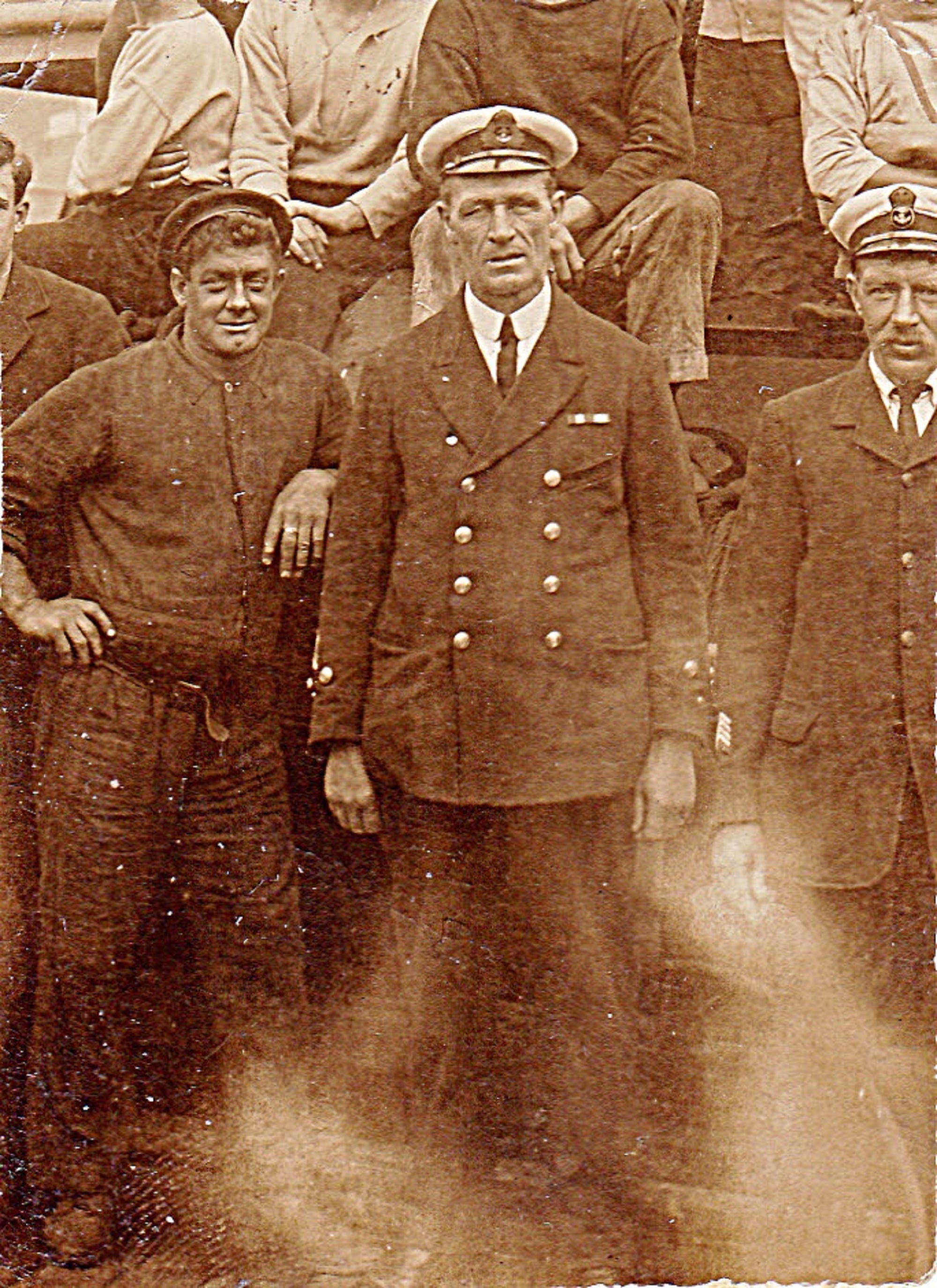
A former Viola skipper was George William Tharratt – whose birth name was the grandiose-sounding Green Willows Tharratt – (correct spell both) who had commanded Viola from 1912.
In 1919, he was awarded the Distinguished Service Cross for services to minesweeping.
Dr Robb Robinson made a local radio broadcast about this in 2014 to which George’s then-97-year-old son – Eric Tharratt –was listening.
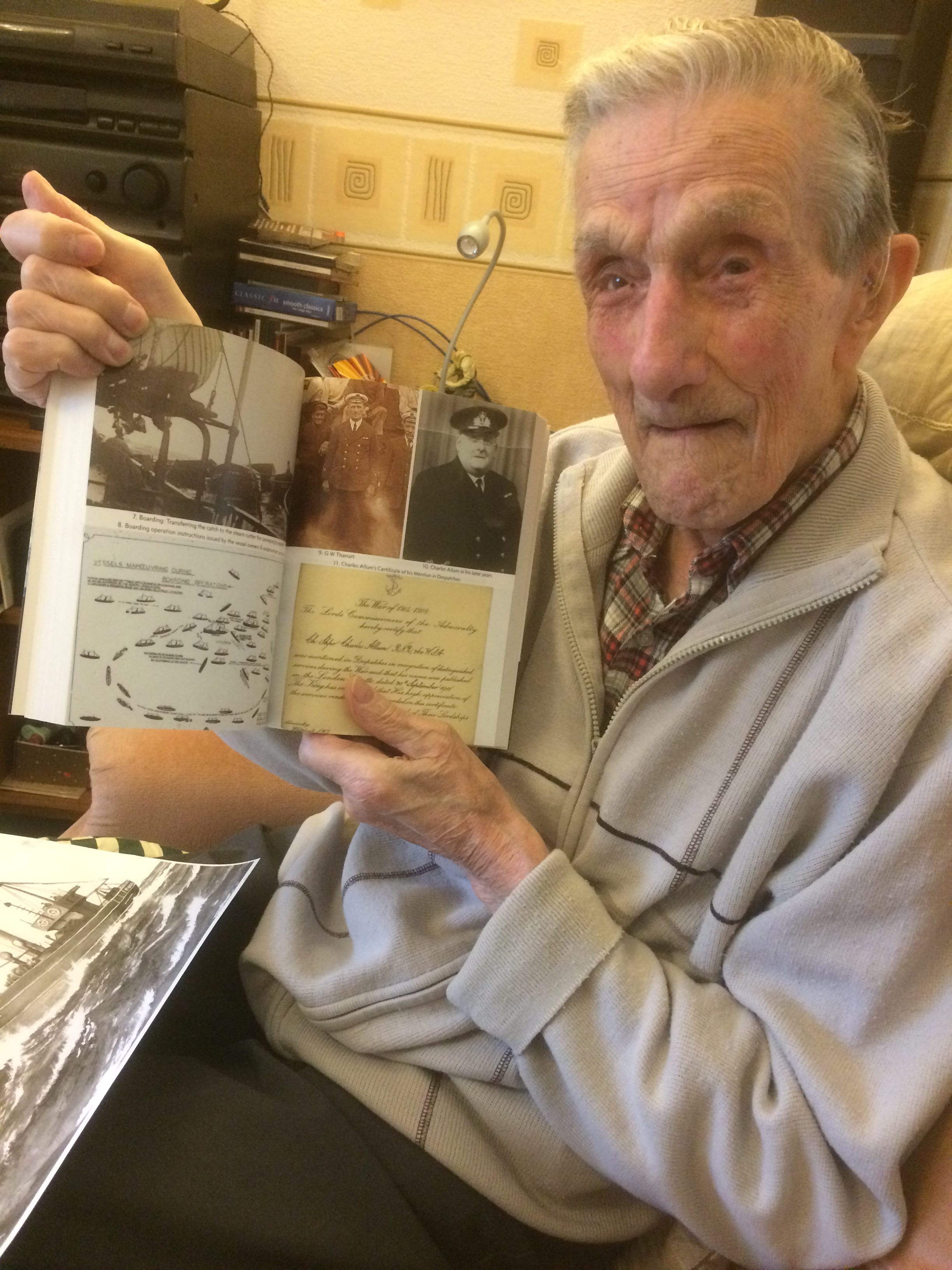
The old man learned more about his father from Dr Robinson’s book than he had learned in life as his father was always at sea. Eric died aged 104.
In peacetime Viola was sold to Norwegian owners and renamed Kapduen and then within a few years converted into a whaler and renamed Dias. Her whaling involved voyages to the African coast.
In 1927, she was sold to Compania Argentina de Pesca Sociedad Anonima – known as Pesca. They operated from Grytviken, South Georgia and used her for taking elephant seals. Pesca sold out to British firm Albion Star in 1960.
By 1964–65 the whaling station closed and the ship together with the other vessels Petrel and Albatros, was mothballed. Viola/Dias was still there in 1982 when some Argentine scrap metal merchants landed with the aim of cutting up the ships.
They then hoisted their country’s flag and triggered a war, making Viola arguably the only vessel to have ‘seen action’ in the Great War and the Falklands. (See: Bringing the Viola Home, Fishing News, December 17, 2020)
The Viola Trust’s Project Manager, Mr Norman Court said: “The Viola wraps itself round you. It’s fascinating, it’s got the history, the pedigree, the heritage, it’s got real people involved. It’s a world icon and it’s ours.”
Trust patron and former Labour Home Secretary Mr Alan Johnson worked closely with the fishing community throughout his 20 years as Hull West and Hessle MP, successfully won compensation for the families of men lost at sea.
He told the film-makers: “It was the biggest distant water trawling port in the world. Something like 250 trawlers went out from here. I’d have loved to have seen that.
“There’s nobody in Hull who doesn’t know someone who is associated with the fishing industry – either they went to sea or they were involved in the processing. Viola epitomises all of that and is one more aspect of a proud heritage of a great city.
“Trawling is no longer the lifeblood of the city but it’s still the heartbeat.”